Supported by the Conservation Leadership Programme (CLP) in 2022, a project in Argentina’s Dry Chaco has revealed key insights into mammal conservation management in human-modified landscapes, and is now broadening its reach and impact through new initiatives.
“[CLP support] helped strengthen my conservation social science skills and gave me the confidence to take on a leadership role in a challenging context. Being part of the CLP community also reinforced the idea that small, locally grounded projects can contribute to broader conservation efforts.” – Sofía Nanni, 2022 project leader
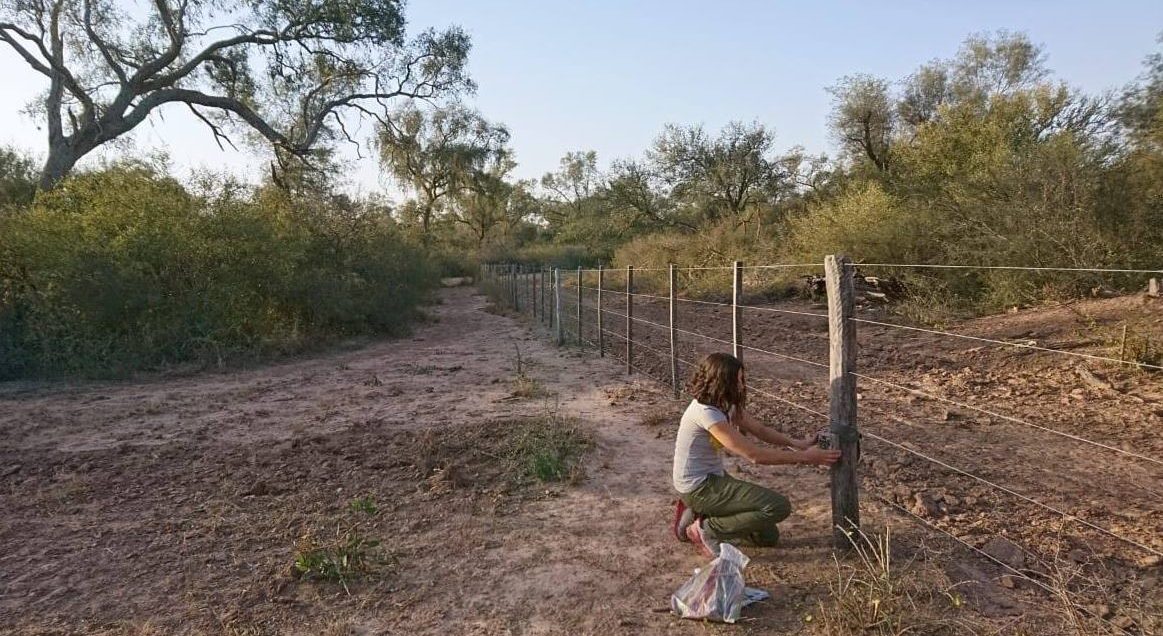
Project leader Sofia Nanni installing a camera trap in the field site, “Chaco salteño” © José L. Tisone
In the Argentine Dry Chaco, a large subtropical dry forest that extends into Bolivia and Paraguay, many mammal species are under threat mainly due to widespread deforestation and habitat loss. Protected areas cover less than 7% of the land, meaning the future of many species depends on their ability to persist in human-modified landscapes.
Supported by CLP in 2022, an early-career team led by Sofía Nanni combined ecological research with community engagement to improve medium- to large-sized mammal conservation in these landscapes. They successfully targeted two major barriers: a lack of management in private farmlands and local intolerance towards wildlife, particularly pumas, due to livestock losses.
Now, the team is continuing to broaden their impact through further outreach efforts. This includes a new social media initiative, “@chacoexistencia”, which will highlight the project’s objectives and achievements in the hope it will stimulate further discussion and conservation efforts worldwide. Here, we look at the project’s significant contribution towards securing peaceful human-wildlife coexistence- and what’s next on the agenda.
A tenfold reduction in livestock losses
In the project area – a Key Biodiversity Area located in the “Chaco salteño” – one of the team’s major successes was working with local families to co-create a new way to reduce livestock predation: studded leather collars. The first of its kind in the region, this initiative was found to reduce livestock losses by tenfold, helping to build trust with local communities, reduce retaliatory killings of carnivores, and support long-term conservation goals.
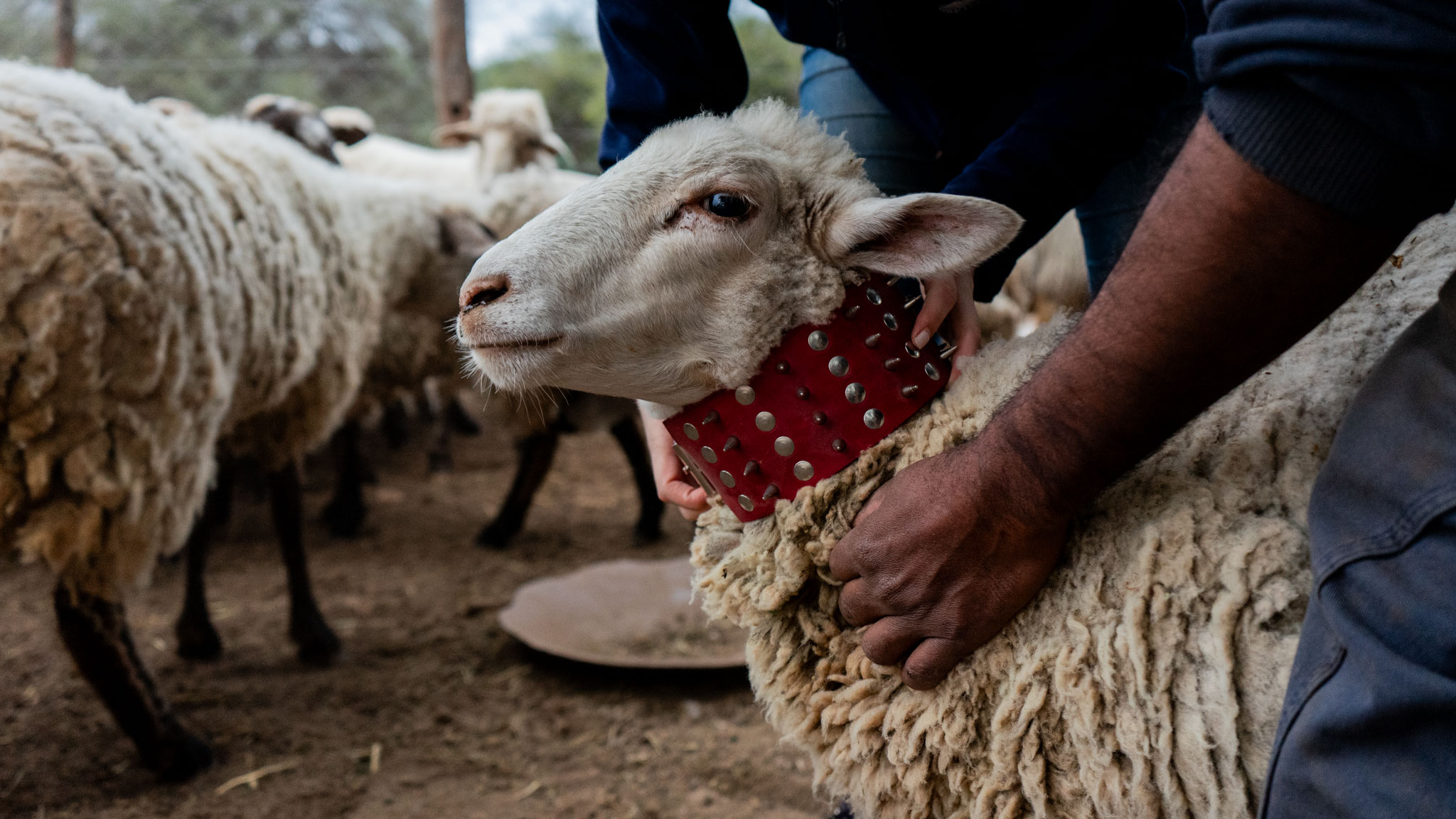
The team co-developed leather studded collars with local farming families as a new intervention to reduce livestock predation © Olivia del Giorgio
Helping large carnivores persist in human-dominated landscapes
Another of the team’s major achievements was publishing new insights into the conditions that allow large carnivores like the puma (and other mammal species) to persist in agroecosystems, such as ensuring more woody cover. They translated this knowledge into practical tools, including a coexistence map.
These new insights were shared at national and international conferences, contributing to the global discussion and implementation of conservation management in human-modified landscapes.
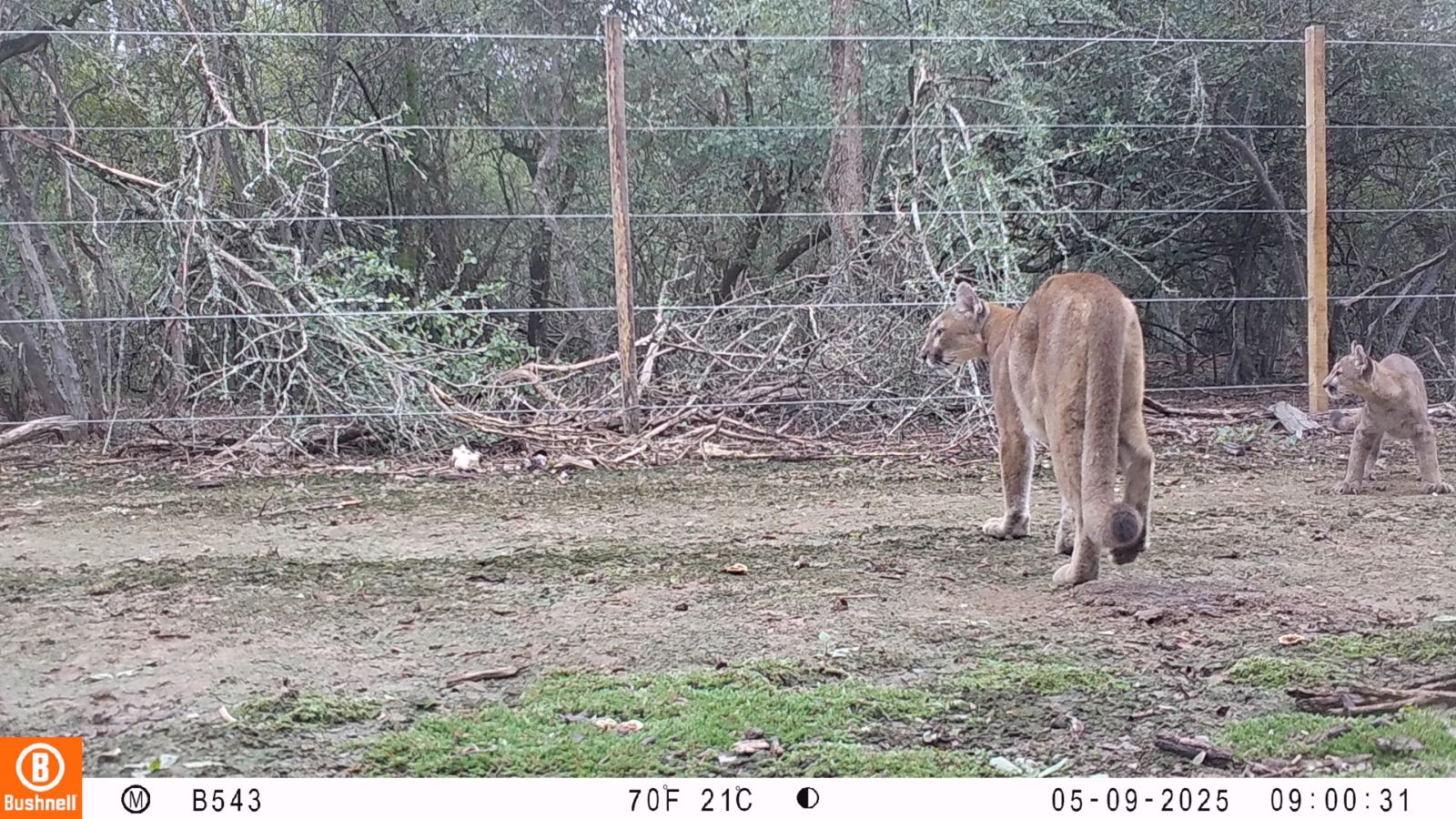
A puma mother and cub on private farmland caught in one of the project’s camera traps © Sofía Nanni
They also published a regional analysis identifying areas of opportunity and barriers for human-puma coexistence across the Chaco. And beyond the project area, Sofía and her team have developed and published a new framework for addressing wildlife-related impacts and human-wildlife conflict that can be applied in other regions and contexts.
Beyond the CLP project
CLP support has allowed the project to grow into a position from which it can achieve even deeper impact. Having already expanded the Chaco conservation network by engaging local and international students through field visits, workshops and research collaborations, the project has recently secured additional funding to continue this outreach work with schools and communities.
Alongside this, the team has trained local residents in camera trap deployment and data collection, thereby building local capacity and strengthening community engagement.
And now, they have started a social media initiative with the aim of sharing the project more openly, beyond academic and technical spaces.
Sofía said: “Through this platform, we want to tell people what the project does and why coexistence with pumas and other species matters in the Argentine Dry Chaco. We also want to highlight the region’s huge social-ecological value and the project area, and what we are learning through participatory approaches developed together with local communities.
We hope that it will help us connect the project with other practitioners, conservationists and people facing similar challenges elsewhere.”
Investing in capacity, dialogue and shared knowledge
Through field research and community engagement, this project has laid successful groundwork for effective mammal conservation in the Argentine Dry Chaco. It has shown how partnerships (among communities, farmer organizations, and research institutions) can help to scale up impact.
“This project highlights the importance of investing in capacity, dialogue, and shared knowledge to achieve conservation in areas where people and wildlife live together. The groundwork laid here will continue to grow through follow-up activities and collaborations already underway.”
Interested in learning more? Watch the project video below and follow its progress on Instagram: @ChacoExistencia
Want to help us generate positive change for nature and build the next generation of conservation leaders, like Sofia? Email us at clp@birdlife.org.